Alliances of World War 1!
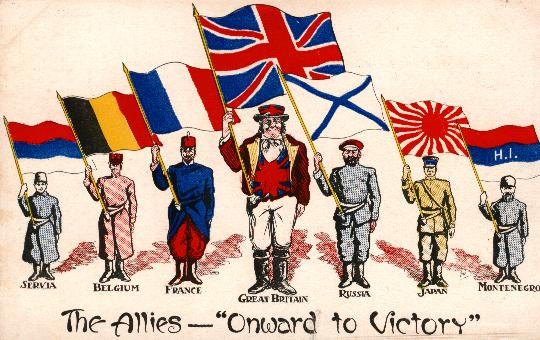
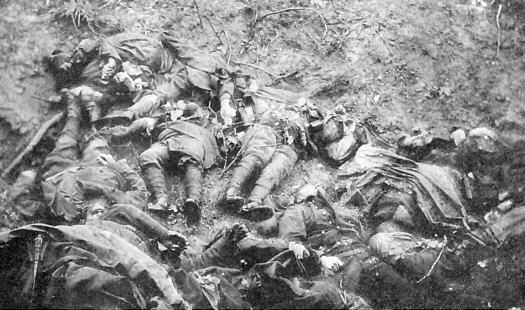
 | What Side! Everyone knows about WW1! Not everyone knows about the alliances. There were two sides: Central Powers and Triple Alliance. If you go to the 'Alliances Break Down' page, you will see the different sides. Central Powers consist of Germany, Austria-Hungrary, Ottoman Empire, and Bulgaria. Triple Alliances includes Britain, France, and Russia. This war pretty much was fueled off of hatred. It is sad, that so many lives were lost because of people's ignorance. Let me first go over the different alliances, in more detail. |
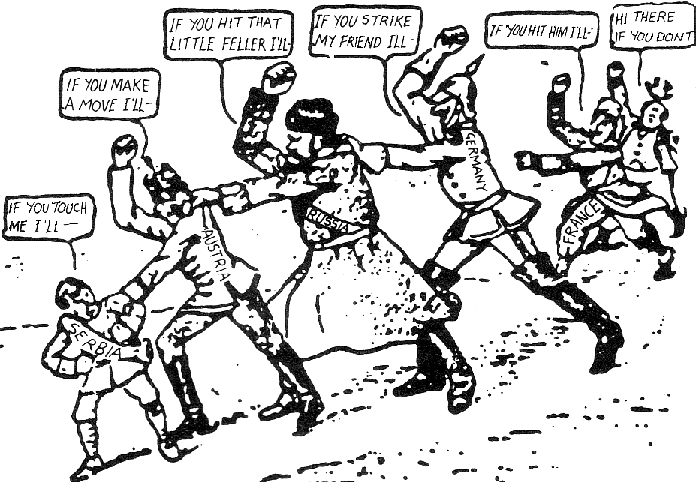
First, what is an alliance? An alliance is an agreement made between two or more countries, stating that they would help each other if needed. There were many alliances signed between 1879-1914. In 1879, The Dual Alliance, a pact to protect Germany and Austria-Hungary from Russia. In 1881, Austria-Hungary made an alliance with Serbia, to stop Russia from gaining control of Serbia. 1882, The Triple Alliance was formed. It united Germany, Austria-Hungary and Italy, thus preventing Italy from taking sides with Russia. You will now see, things are about to turn around. In 1894, Russia formed an alliance with France. This protected Russia against Germany and Austria-Hungary. Entente Cordiale was signed in 1904, this was an agreement, not a formal alliance, but just an agreement between France and Britain. 1907, there was the Anglo-Russian Entente; this was between Britain and Russia. In order to counter the increasing threat from Germany, the Triple Entente was formed between Britain, France, and Russia. In 1914, Britain, France and Russia agreed not to sign for peace separately.
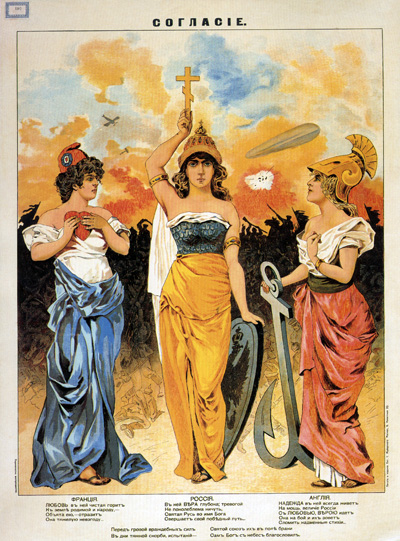
The Three Emperors' League died a slow death: Germany refused to renew its reinsurance treaty with Russia, and Russia in turn sought an alliance with France. At the same time France, face to face with an increasingly powerful Germany and a hostile Central European combination, felt great need of an ally. French diplomats began to make overtures to Russia for an agreement to counterbalance the Triple Alliance. French capital aided Russian projects, especially the Trans-Siberian RR, and friendly diplomatic visits were exchanged. In 1891 there was an understanding between the powers; this was strengthened by a military convention in 1893, and by 1894 the Dual Alliance between Russia and France was in existence. It was publicly acknowledged in 1895. Colonial rivalries between Russia and Britain had in the late 19th century made those powers hostile; the field of contest was Asia—Turkish affairs, Persia, Afghanistan, China, and India. But after the defeat of Russia in the Russo-Japanese War, and particularly after Sir Edward Grey gained influence in the British foreign office, Britain came to favor a friendly settlement. This was finally achieved in the Anglo-Russian entente of 1907. That agreement created the international group opposing the Triple Alliance—France, Great Britain, and Russia had formed the Triple Entente.
In 1882, Italy was angry at France mainly because France had forestalled an Italian advance by occupying
Sources for any additional information:
http://europeanhistory.about.com/od/worldwar1/a/World-War-One-The-Major-Alliances.htm
http://www.worldology.com/Europe/world_war_1.htm
These sources were used to help with information to this site!